The Scariest Books Ever Written
Eighteen horror novels and story collections that still work on a reader today, from a creature in 1818 to a father and son walking through a burned country.
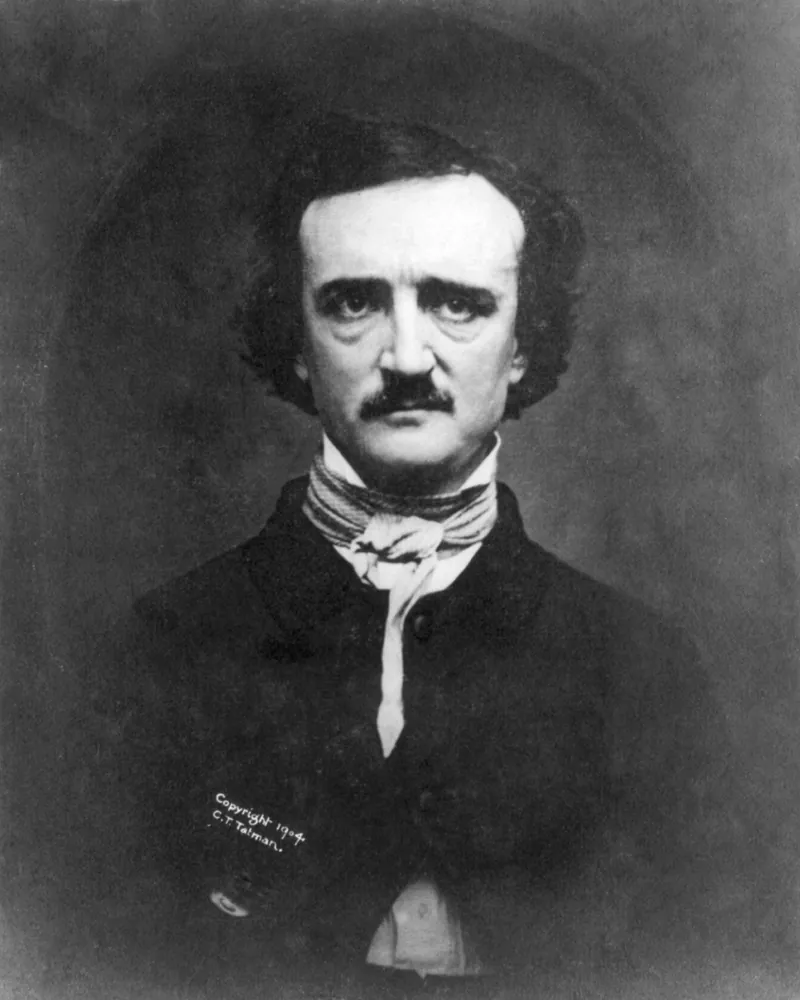
Some books scare you with a monster. Others do it with a house, a neighbor, a child, or a hallway that should not be there. This list runs from 1818 to 2006 and leans toward books that still frighten people now, not just the ones that shocked readers in their own year. Each entry gives the year the book first came out.
01Where horror started
- Frankenstein, Mary Shelley (1818). Shelley began it in 1816 at Lake Geneva during a ghost story contest with Lord Byron and Percy Shelley. The creature is articulate and lonely, and the real horror is the man who made him and then walked away.
- Tales of the Grotesque and Arabesque, Edgar Allan Poe (1840). A two volume collection of 25 stories, including “The Fall of the House of Usher” and “Ligeia.” Poe made dread feel like an illness, something the narrator can’t think his way out of.
- Strange Case of Dr Jekyll and Mr Hyde, Robert Louis Stevenson (1886). A London lawyer named Utterson tries to work out why his respectable friend is tied to a violent stranger. Everyone knows the twist now, and the book is still unsettling.
- Dracula, Bram Stoker (1897). Told through letters, diaries and clippings, so the reader pieces the threat together before the characters do. Stoker wrote it while working as manager of Henry Irving’s Lyceum Theatre in London.
- The Turn of the Screw, Henry James (1898). A governess at a country house becomes sure that two ghosts are after the children in her care. James never settles whether the ghosts are real, and that is what keeps readers up.
02Mid century dread
- I Am Legend, Richard Matheson (1954). Robert Neville may be the last uninfected man in Los Angeles after a plague turns everyone else into something like vampires. He hunts by day and barricades himself in at night.
- The Haunting of Hill House, Shirley Jackson (1959). An investigator of the supernatural rents a house for the summer and invites guests, among them a shy young woman named Eleanor Vance. It was a finalist for the National Book Award, and the house never needs to show you a ghost.
- Rosemary’s Baby, Ira Levin (1967). A young couple moves into an old New York apartment building with very friendly elderly neighbors. Roman Polanski filmed it the next year.
- The Exorcist, William Peter Blatty (1971). Blatty drew on a 1949 case of supposed possession that he heard about as a student at Georgetown. He won an Academy Award for adapting it for the 1973 film.

03The great run of the 1970s and 1980s
- ‘Salem’s Lot, Stephen King (1975). King’s second novel puts vampires in a small Maine town and lets them take it house by house.
- Interview with the Vampire, Anne Rice (1976). Rice’s first novel, told by a vampire who never stopped regretting what he became. It is more sad than scary, until it isn’t.
- The Shining, Stephen King (1977). A recovering alcoholic takes a winter caretaker job at a closed Colorado hotel with his wife and young son. The hotel works on him slowly.
- Ghost Story, Peter Straub (1979). Four old men in Milburn, New York, have met for about fifty years to tell each other ghost stories. Then their nightmares start coming true.
- Pet Sematary, Stephen King (1983). A family moves to rural Maine, and the father learns about the burial ground past the pet cemetery in the woods. It is King’s grimmest book about grief.
- It, Stephen King (1986). Seven kids in Derry, Maine, fight something that wears the face of a clown, then come home as adults when it returns.
- The Silence of the Lambs, Thomas Harris (1988). FBI trainee Clarice Starling trades details of her past to Hannibal Lecter for help catching another killer. It followed Red Dragon (1981), and Jonathan Demme’s 1991 film won five Academy Awards, including Best Picture.
04Newer nightmares
- House of Leaves, Mark Z. Danielewski (2000). A family finds their Virginia house is slightly bigger inside than outside, and then a dark hallway appears. The book is built from footnotes, typefaces and pages you have to turn sideways.
- The Road, Cormac McCarthy (2006). A father and son walk south through a burned and empty America. There is no monster, only other people, and it won the Pulitzer Prize in 2007.
The best of these books never quite show you the thing in the dark.
If you want one place to start, The Haunting of Hill House is short and works on almost everyone. If you want something long enough to live in for a few weeks, it is hard to beat It or ‘Salem’s Lot. Most of the older books on this list are in the public domain and cost very little.
A wrong name, title or year in The Scariest Books Ever Written can be reported through the contact page, where corrections get read first.
Sources: Wikipedia
Where the facts in The Scariest Books Ever Written come from
- Mary Shelley, Wikipedia
- Tales of the Grotesque and Arabesque, Wikipedia
- Strange Case of Dr Jekyll and Mr Hyde, Wikipedia
- Bram Stoker, Wikipedia
- I Am Legend (novel), Wikipedia
- The Haunting of Hill House, Wikipedia
- Rosemary's Baby (novel), Wikipedia
- The Exorcist (novel), Wikipedia
- Stephen King, Wikipedia
- Anne Rice, Wikipedia
- Ghost Story (Straub novel), Wikipedia
- The Silence of the Lambs (novel), Wikipedia
- House of Leaves, Wikipedia
- Cormac McCarthy, Wikipedia
Questions and answers
What is the scariest book ever written?
The scariest books list runs from Frankenstein in 1818 to The Road in 2006. The Haunting of Hill House is the suggested starting point because it is short and frightens almost everyone, while It and 'Salem's Lot suit readers wanting something long.
How did Mary Shelley come to write Frankenstein?
Mary Shelley started Frankenstein in 1816 at Lake Geneva during a ghost story contest with Lord Byron and Percy Shelley. Published in 1818, it gives an articulate, lonely creature, and its true horror is the maker who abandoned him.
What Stephen King books are the scariest?
The scariest books list includes four Stephen King novels, 'Salem's Lot, The Shining, Pet Sematary and It. Pet Sematary from 1983 is described as his grimmest book about grief, set in rural Maine near a burial ground.
Was The Exorcist based on a real case?
William Peter Blatty based The Exorcist, published in 1971, on a 1949 case of supposed possession he heard about while studying at Georgetown. He later won an Academy Award for adapting the novel into the 1973 film.


The Saturday Letter