A Short History of the Short Story
The short story is the only literary form with a founding rulebook. Here is how it went from paying the rent to living in writing programs.

The short story is the only literary form that came with a rulebook. Edgar Allan Poe wrote it in 1842, in a review of Nathaniel Hawthorne’s Twice-Told Tales for Graham’s Magazine. A tale, he said, should be readable in one sitting, and every sentence should push toward one planned effect.
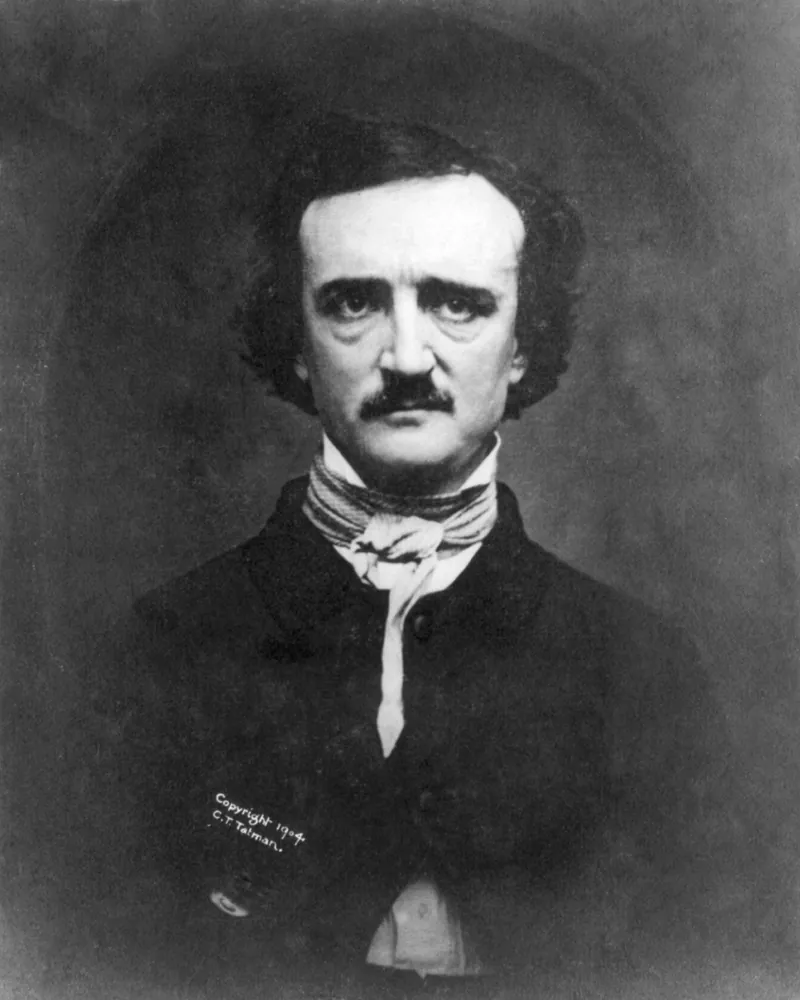
Almost two hundred years later that is still the working definition. Nobody writes novels to a rule Henry James laid down, but the short story has spent its whole life arguing about whether to follow Poe.
01The magazines made it
For roughly a hundred years American magazines bought short fiction in bulk and paid real money for it. Harper’s, The Atlantic, Collier’s and above all The Saturday Evening Post ran stories every week the way a paper runs columns.
The short story wasn't a calling card. It was the job.
That market produced a kind of writer who doesn’t exist anymore, one who could live on stories. F. Scott Fitzgerald wrote for the Post to pay for the novels. Then television took that audience, the fiction pages went first, and by the 1970s you could name every magazine still buying stories from memory.
Two annual books grew out of that era and are still going. The Best American Short Stories has come out every year since 1915, and the O. Henry Prize stories since 1919. Being picked for either one still matters to a writer’s career.
02Chekhov and the end of the ending

While American magazines paid for plot, Chekhov was taking it out. His stories tend to stop a page before you expect, on a gesture or the weather, and the effect is that you’ve been handed the rest. Joyce did the same in English with Dubliners in 1914 and gave it a name, the epiphany, where a character sees their situation clearly and nothing changes because of it.
A novel can survive a slow chapter, but a short story can’t survive a slow paragraph, which is why it is the form most often praised and least often finished.
03Minimalism and the uncredited editor
The last time the short story ran the literary conversation was the late seventies and early eighties. Raymond Carver’s Will You Please Be Quiet, Please? in 1976 and What We Talk About When We Talk About Love in 1981 made a style out of cutting, with flat sentences, out of work men and a lot of silence.
It later came out that much of that was his editor Gordon Lish, who cut some stories by half and rewrote the endings. A generation of writers learned to write like a man who had been edited by somebody else.
04Where the form lives now
- University writing programs, which need something short enough to workshop in two hours.
- Online literary journals, which publish a lot of excellent work for very little pay.
- The debut collection, bought by publishers as an option on the novel that comes next.
- Science fiction and crime magazines, where the old magazine tradition never fully died.

Alice Munro’s Nobel in 2013 was the first for a writer whose life’s work was almost all short stories, and the coverage treated it as a surprise. Munro spent fifty years showing a story can hold as much time and as many people as a novel, in twenty pages.
Poe would have hated most of what came after, but he was right about the main thing. A short story is the only kind of prose where the reader can hold the whole shape in their head at once.
Duncan McAdams runs Book Magazine. Corrections and pitches go through the contact page, and corrections get read first.

The Saturday Letter