The Hare with Amber Eyes by Edmund de Waal
A potter inherits 264 tiny Japanese carvings and follows them back through Paris, Vienna and the worst of the twentieth century.
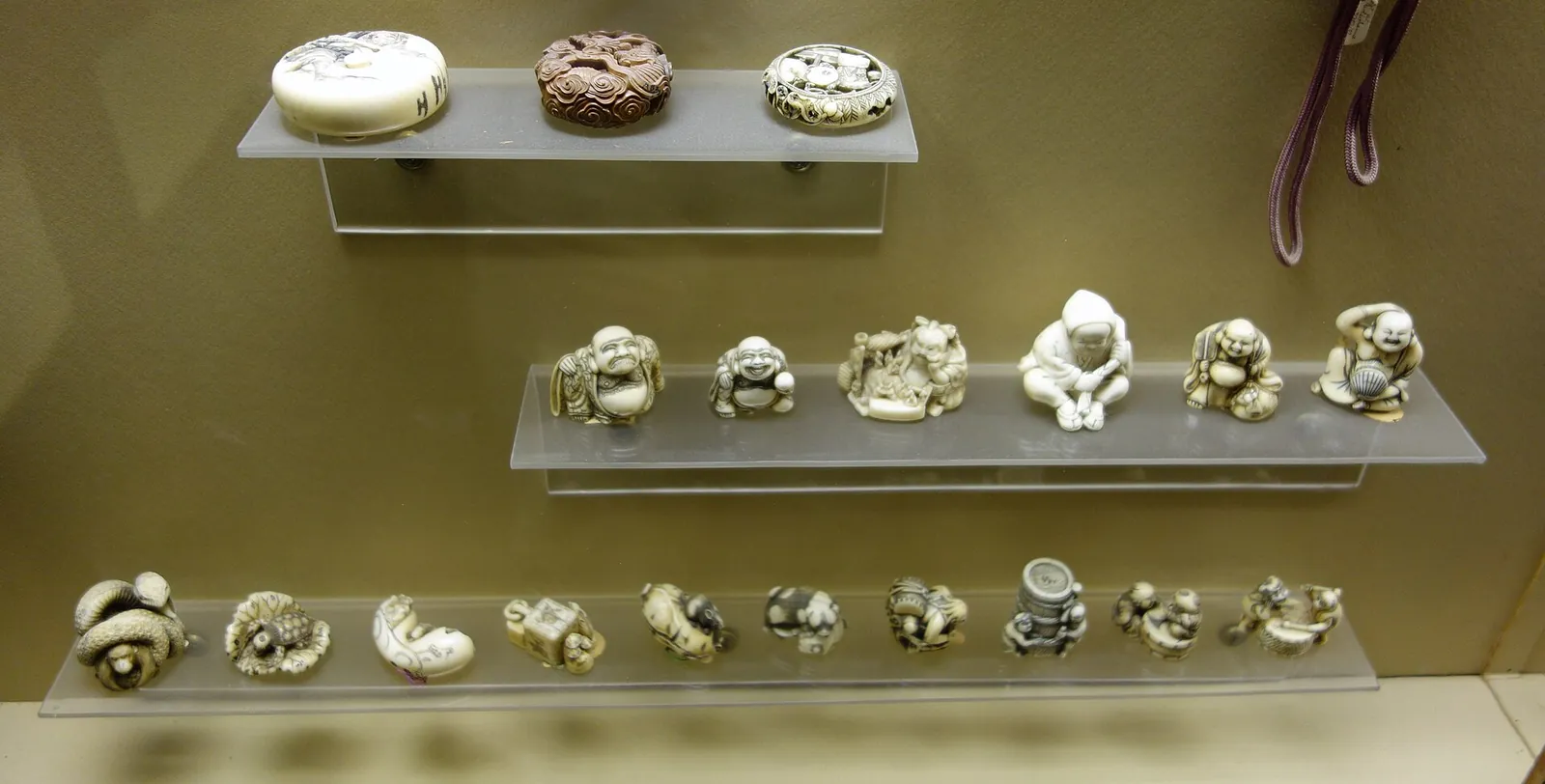
Edmund de Waal makes pots, and he is very good at it. That matters more to this book than you’d think, because the whole thing is written by a man who spends his working life thinking about what a small object does in your hand.
From a great uncle in Tokyo he inherited 264 netsuke, the little Japanese toggles carved in wood and ivory that held a pouch to a sash. A hare with amber eyes is one of them. He set out to learn where they had been, and the answer runs through four cities, five generations and most of the disasters of the last century.

01Following the objects
Family memoirs like this usually go wrong one of two ways. Either the family gets asked to carry more history than it can, or the writer sinks into the archive and you stop caring which cousin married whom.
De Waal avoids both by keeping the netsuke at the center. The question is never who the Ephrussi family were in general, but where these carvings were, in whose room, on whose shelf, and who touched them. When the family is rich in Paris, the netsuke are a fashionable curiosity. When the family is being destroyed in Vienna, they are in a pocket.
The objects go where the people go, and because they are specific, the history stays specific.
02Paris
Charles Ephrussi buys the carvings in the 1870s. He writes about art, buys the Impressionists early, edits an art review, and is generally agreed to be one of the people Proust drew on for Swann.

De Waal is sharp on what that collecting meant. This was a rich, assimilated Jewish family in a city that admired their taste while printing the nastiest antisemitic press in Europe. They bought Japanese objects nobody in Japan considered art to furnish rooms that proved they belonged. The display case was a defense as much as a display, and the book never lets you forget it.
03Vienna
Charles sends the netsuke to Vienna as a wedding present. They end up in a dressing room in the huge family house on the Ringstrasse, where the children play with them while their mother gets dressed. De Waal lets you settle into the breakfast rooms and riding lessons for a hundred pages before the 1938 Anschluss, when the family loses the bank, the house, the pictures, their citizenship and very nearly their lives in a matter of days.

The netsuke survive because a maid named Anna carried them out of the looted house a few at a time in her apron pocket and hid them in her mattress. De Waal tells this plainly, admits he doesn’t know her last name, and doesn’t try to make it uplifting. It is the best moment in the book because he leaves it alone.
04Where it slips
The Tokyo and England sections are thinner. Once the family is scattered and rebuilt, the netsuke stop being a thread through danger and become an heirloom, which is less interesting to follow. The scenes of de Waal traveling to archives and holding the carvings work the first few times, but by the tenth they are a habit, and a firmer editor would have cut thirty pages of him standing in doorways.
05What he wrote next
De Waal kept going with the same method. The White Road in 2015 follows porcelain, the material he works in, from China to Europe and back. Letters to Camondo in 2021 is a set of letters to a Paris collector whose family museum sits near the Ephrussi house, and whose family was destroyed in the war. If you liked the Paris chapters here, that is the one to read next.
The verdict
The reputation is earned. Read it for the Paris and Vienna chapters, which are as good as this kind of writing gets, and for its central idea that who held an object is as much a story as who owned it. It also makes the case for why restitution matters without ever arguing it, because a list of what was taken from one apartment in 1938 does the work on its own.
Read it if
You like history told through one family and a few real objects.
Skip it if
You want a fast moving narrative, since the later chapters slow down.
Duncan McAdams runs Book Magazine. Corrections and pitches go through the contact page, and corrections get read first.
Keep reading


The Saturday Letter