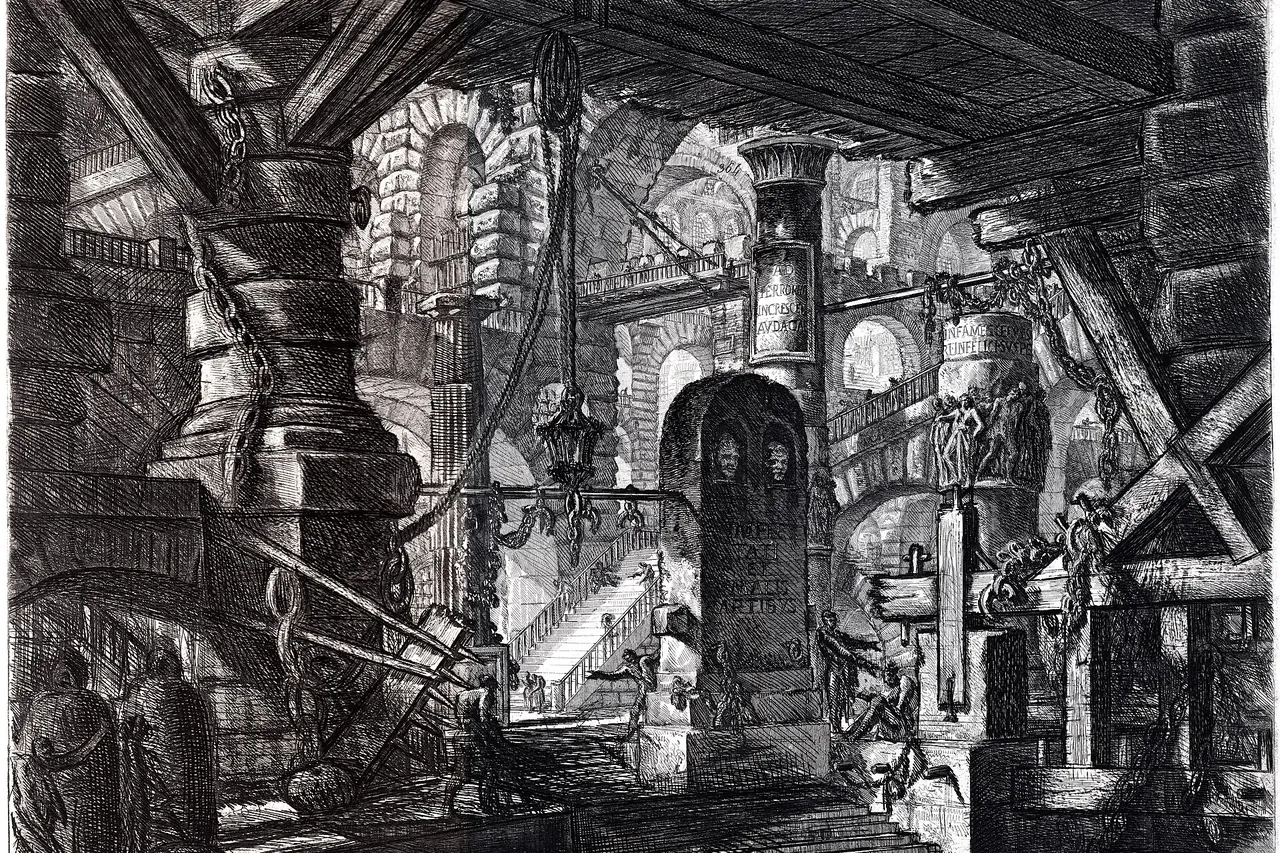
A man lives in a house with no outside. It has more halls than he can count, each lined with marble statues that never repeat, and the lower floors flood with tides he has learned to predict. He keeps a journal, catalogs the statues, fishes, dries seaweed, and twice a week meets the only other living person he knows, who he calls the Other. He isn’t unhappy. He believes the House loves him, and from his own account he is probably right.
That is the first forty pages of Piranesi, and most of the rest is a spoiler. That is awkward for a review, but it’s a real achievement for a novel.
Clarke’s first novel, Jonathan Strange & Mr Norrell, came out in 2004, ran close to a thousand pages and had footnotes citing books that don’t exist. Sixteen years later, after a long illness, she published this one, with one setting, one voice and for most of its length two characters. It is the opposite book by the same mind, and it’s better.
01The voice does all the work
Everything rests on the narrator’s prose, which is formal, careful, a little old fashioned and full of capitalized nouns like the House, the Tides and the Statue of a Faun. A lesser writer would use that voice to be cute. Clarke uses it as evidence. He describes his world like a man writing field notes for an institution that doesn’t exist, and the reader slowly sees the shape of something he can’t see himself.
The pleasure of the middle third is getting there a little ahead of him, and feeling bad about it.
An unreliable narrator is easy. A narrator who is completely reliable about the facts and wrong about what they mean is much harder, because the meaning has to be hidden in the facts and the writer has to trust you to find it.
02What it is about, as far as it is safe to say
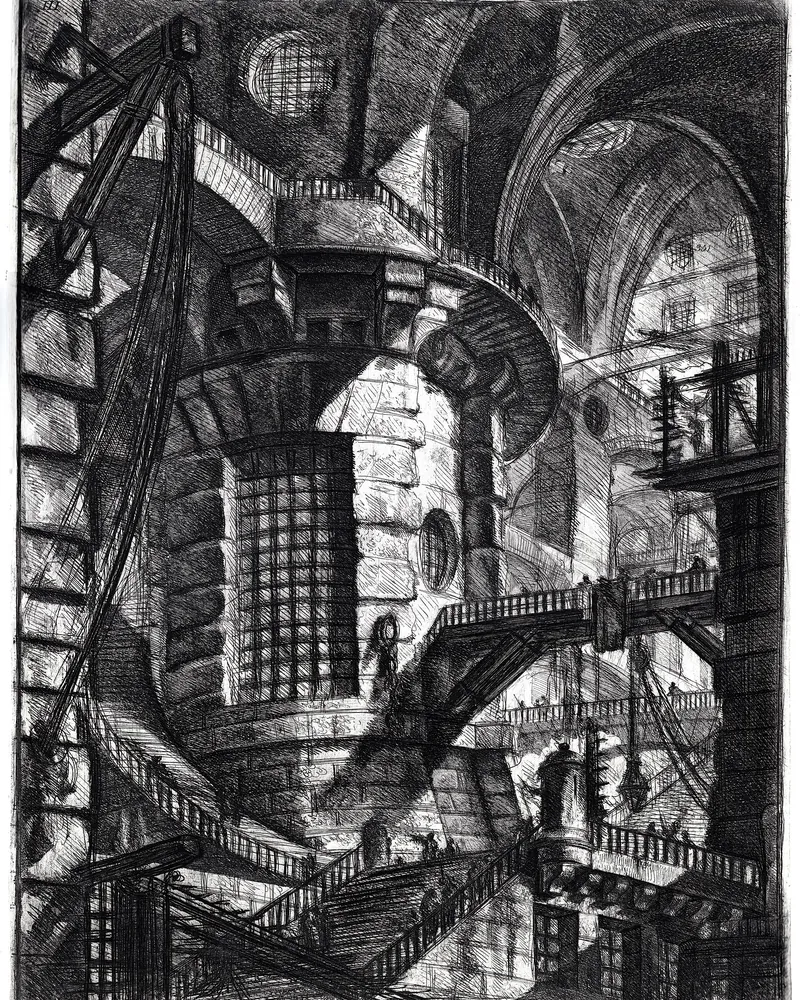
The title points at Giovanni Battista Piranesi, the eighteenth century engraver whose imaginary prisons are all staircases going nowhere. That fits the architecture but not the mood. His prisons are oppressive, and Clarke’s House is beautiful and kind to the man inside it. The novel is about what that kindness costs.

Underneath, it is a book about knowledge and what people will do to each other to get it. The Other is a scholar with a theory about how to get something out of the House. The narrator only wants to understand where he lives. The book is pretty sure which of them understands more.
There is also a book about illness and recovery in here, written by someone who spent years unable to work. It would be crude to call it autobiography, but it would be silly to pretend it isn’t there.
03Where it is weakest
The last thirty pages have to explain a lot, and explaining is the one thing this book isn’t built for. The prose has to leave the House’s voice for something flatter to tie off the plot, and you feel the drop. If what you loved about Jonathan Strange was the history and the footnotes, this is a much sparer book.
The verdict
Read it in as few sittings as you can, and don’t read anything about it first, including the back cover, which gives away too much. It is one of the warmest books about loneliness in years, and that is the main reason to pick it up.
Read it if
You like strange, quiet books that reward paying attention.
Skip it if
You want the big, crowded world of Jonathan Strange & Mr Norrell.
Duncan McAdams runs Book Magazine. Corrections and pitches go through the contact page, and corrections get read first.
Keep reading


The Saturday Letter